Tuesday, 16 December 2014

Personal Service Has Left the Building...

Learning -to-drive-in-nottingham

It's the end of an era at my local dealership.

I've always been happy with the service I got at my garage. I knew who I was talking to on the phone and they knew who I was. Most importantly they knew I was a driving instructor and no car means no job for me. I enjoyed a really quick turnaround on work and often would only need to cancel 1 or 2 lessons to get it serviced. Repairs were always done quickly to get me back out on the road. Now times have changed.
   My usual garage has been bought out by a much larger dealership. It took me a few phone calls to realise that I wasn't actually talking to the garage but to a call centre. The person on the other end didn't really understand what I was on about. When discussing a previous problem that was on file you could tell she did not have even the most rudimentary knowledge of cars so it was hard work trying to get her to understand what I needed. When I did get to speak to the people I know it was obvious that there is a more rigid structure in place and things were going to take more time.
   Time is the important thing when you have to get back out there on the road. The worst thing about the new style set up is how much longer the jobs take. I only had to ever wait a day for a clutch and this time it was almost two. I sat there on the second day for about 4 hours waiting for it to come out of the garage, cancelling lessons as and when. This is where a driving instructor loses money as well as inconveniencing pupils, not something I like to do. I ended up cancelling the last one because they insisted on washing it even though they knew I was waiting. Most expensive car wash ever I think.
    Today I sit writing this having cancelled the working day. My power steering has been sorted but they are baffled why the nearside door mirror won't tilt sideways, only up and down. It's not the wiring, switch or motor so what could it be? It's not worth a full day off work so I probably won't get it done. I can just poke it with my finger if it needs tilting sideways.
   It's sad that there has been this big shift towards the corporate. Seems to be happening everywhere I suppose. It's a big thing to be on good terms with your garage when you're a driving instructor. It can save a lot of time and hassle. Especially if you've got driving tests coming up. In an hour or two I'll go and pick up my car with the faulty mirror. Hopefully the whirring noise from the steering will have gone. Still! Christmas soon and then a Happy New Year!

driving lessons Nottingham

driving instructors Nottingham

Friday, 5 December 2014

Zombie Pedestrians Invade Our Roads!

Road Safety Pedestrians Nottingham

It's like I'm scared to turn left sometimes.

I swear the problem of distracted walking is getting worse. Driving lessons this week have been an exercise in dodging the texting person walking out in the road without even a glance at what's coming. It's so easy to get involved with a text conversation and that's fine when you're sat in a chair or stood in the middle of a field. When it comes to stepping out in front of moving traffic though it's another case entirely.
   Research from a car insurance firm has shown that a great number of motorists have had to swerve or brake hard to avoid a phone zombie while other drivers have admitted to actually hitting them. There has been a great deal of outcry regarding the use of a mobile phone while behind the wheel of a car and rightly so. Perhaps it's time to have a closer look at how pedestrians can do their part to keep the roads safe and sound.
   We are all pedestrians some of the time. I had the Green Cross Code drilled into me when I was a youngster. I am not the best in the world at crossing the road but I do at least look and wait if something's coming. My kids think I'm a bit paranoid when it comes to road safety, but rather that than bouncing off a car bonnet and straight into hospital. It's got to the point that my learners are having to brake and check that the pedestrian is going to look and see us before we make a turn. The person just about to step out in front of us is staring at a screen a lot of the time and it makes me nervous. Pedestrians do have a duty of care towards themselves and it can't always be considered as the driver's fault if an accident does happen.
   It seems the problem is a global one. I read that in New Jersey there are on the spot fines for people caught texting while walking. Could be a good deterrent. Nothing people hate more than losing cash. It's worse than putting yourself in danger to some folk. In China they have installed a walking lane for people who wish to text and walk. The lane next to it is for walking without using a phone and that tends to move much more quickly. The same sort of thing was carried out by the Philadelphia Mayor's Office as an April Fool's day prank. Good way to get the point across I think.
   What is the point of wandering across the road about 10 yards away from a pedestrian crossing when it's busy? There is no point at all. But if you are staring at your phone you may not realise that the crossing is there let alone the car which is just about to hit you. A couple of times this week I have seen people wearing headphones and jogging down the middle of the road over the hatched markings. Pathetic really and I bet they would blame the driver if they got hit.
   Time for us all to wake up and put the phone away when we're near the road. The text message can wait and if it can't then just stop, get the text sent and then start walking again. I believe this kind of action would be a major contribution to road safety and you can quote me on that.

Learn to drive in Nottingham

Driving Lessons Nottingham

Monday, 24 November 2014

Driving Lessons On Star Rated Roads

star-driving-lessons-nottingham

Personally I like the idea of safety ratings for roads.

I've just been reading about how the government is thinking of implementing a star ratings system for Britain's roads. I think this may actually be a good idea.  If it gets drivers to think about risk and consider the dangers of the road we could be on to a winner.
  You could argue that the experienced driver should have enough skills to deal with whatever they encounter on the road safely and smoothly. As the vast majority of people take no further training at all after the initial L test this is sadly not the case. The star ratings could be used by route planning devices which can then guide motorists around these accident hot spots. Trouble here I think is that more traffic pushed onto other roads makes those roads less safe owing to higher traffic volume. Lengthening the journey also increases risk. Driving on a road with a high risk rating may prompt the driver to pay more attention and plan further ahead should they choose not to avoid the risky route.
   One thing it will achieve I think is to encourage local authorities to maintain standards of road signage and markings. Faded road markings are one of the biggest dangers in my experience. When the give way line is hardly there anymore and is totally invisible when it's raining then you can't really blame a driver for missing it. Positioning is difficult when lane markings are faded and nobody knows which lane they should be in. Signs are often hidden behind over hanging bushes in the summer and cannot be seen at all. Dangerous if it's a hazard sign for a tight bend ahead. If authorities are encouraged to solve these issues in order to receive a higher star rating then that's a good thing.
   Perhaps the rating system could be used for planning routes for driving lessons and tests in the future. Teaching hazard awareness on roads with different ratings and using these differences as a teaching tool could prove interesting. If pupils leave with a greater understanding of risk after passing the test then that's a good way to improve standards in young drivers. Driving test routes could be planned to include the different star ratings and provide a chance to make sure test routes are as standardised as possible across different test centres.
   All in all this could be a winning idea. It puts driving risk in the spotlight. It may make drivers consider the routes they take and more importantly, how they drive on them. Bringing risk into the public awareness may lead to improved driving standards and perhaps prompt people to take extra training to improve their skills if they use roads with a high danger rating. I daresay that the ratings will be based on accident statistics so will not paint a full picture. Ultimately it will be an alert, well taught driver with a good attitude towards risk who does the most to improve road safety.

top rated driving instructors Nottingham

five star driving lessons Nottingham

Monday, 10 November 2014

Will We Ever Really Have Driverless Cars?

be-a-skillful-driver

Not for a very long time I think

I've been reading up on driverless cars and I must say I'm a bit skeptical. Maybe it's because I rely on teaching people to drive for my living. Maybe it's because I think that the skills used in good driving cannot be replicated by a computer. There's a lot more to it than number crunching as you well know.
   There's a big trial starting next year which checks out two different types of vehicle. Completely driverless cars and cars where the human driver can take over at any time. According to the Transport Minister they can improve safety, reduce congestion and be better for the environment. There's no explanation of how but it must be true. Two thirds of British motorists are against the trials taking place on British roads and nine out of ten drivers saying a front mounted incident camera should be mounted so liability can be established in the event of an accident. If it's the car's fault then who is to blame in an accident?
   This shows a skeptical attitude towards the new technology and I must say I share this view. After all a computer can't think. There is so much more to safe driving than not hitting whatever object is in front of you. How will the cars communicate with each other? Drivers use a wide range of signals and gestures to communicate with each other when a situation arises that is not clear cut. A great deal of co-operation is required to get through those tight meeting situations where priorities aren't clear. How can a computer anticipate what will happen next? Forward planning is essential to a good driving. I suppose that there is software that takes care of it for us. 
   Talking about software, there are people working behind the scenes to make sure the robocar will have all the latest map info so it knows where it is in the world. What about roadworks and temporary diversions? That's a lot of info. As the car can't think it can't figure it's way around something that's not already programmed in to it's brain. Whoever is doing the roadworks would have to upload the data on where and when the roads will be blocked and the information would have to be accurate. Sounds like a lot of work to me.
   I can't see this driverless car thing happening any time soon. I like it when people learn new skills and take some responsibility for themselves and others. It's all part of life and growing up I suppose. Constantly handing over our life choices to new technology is a disturbing trend. Or maybe I'm just old fashioned.


Sunday, 2 November 2014

Concessions For Choosing Autonomous Emergency Braking

Emergency-Driving-Lessons

But not for further driver training.

I see that calls have been made for Autonomous Emergency Braking to be fitted to all new cars. It has been suggested that those who choose a car with this technology fitted should be rewarded by having some of the cost covered by a government concession. All very nice. If a person decided to take an advanced driving course to improve their level of competence and minimise risk would they receive a cash incentive? I think not. In a world where it is estimated that three quarters of all UK drivers would fail the standard driving test this reliance on technology can be a dangerous thing.
  What is Autonomous Emergency Braking anyway? I've been looking at how it works on the make of car I drive. A front mounted radar detects vehicles up to 80 metres ahead which the car may hit unless some action is taken. If the device thinks a collision is likely then an audible warning is given. If the driver doesn't respond then there is a braking jolt to again warn the driver. The brakes are prepared so when the driver does brake then the correct amount of braking pressure is automatically applied. No action from the driver means the device will do the braking on it's own. The autonomous braking only works at low speeds up to 30kph. At 30 to 80kph there are warnings if it detects a stationary object but no braking. At speeds above this there are warnings and some partial braking with brake assist for the driver. It's good for stopping low speed shunts then. 
   The technology has it's limitations though. The object in the road needs a certain degree of radar reflectance or the device won't see it. Also if the sensor is obscured by dirt or snow and doesn't have a clear view then it's effectiveness is seriously reduced. Hardly a foolproof device if all that's needed is heavy spray like you get on motorways to render it ineffective. The device can be switched off with the mode stored on the key fob. If two people are using the car then one person could turn it off without the other one knowing. Presumably there is a warning light to tell you whether it's on or off.
   Don't get me wrong I'm not against new vehicle technology at all. I'm all for progress. What I am against is drivers who wouldn't pass the L test thinking that new technology excuses them (or me) from our responsibilities as drivers. Improving your driving  skills, particularly in regard to hazard awareness and planning would help reduce accidents more than any device can. Especially one that can be rendered ineffective if it rains or your car got dirty. In the event of a collision could the device be blamed for not working properly? Would a driver pay less attention to the road if they think the device will take over for them?
   The most effective safety device you can get is a well trained driver who is paying attention to the road and anticipating what will happen so that early action can be taken. Let's have some financial incentives for people who wish to make the roads safer by reaching the highest driving standard they are capable of. 


Tuesday, 21 October 2014

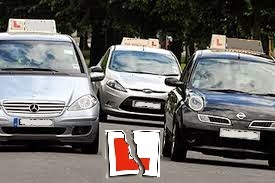
Driving Schools Annoying the Locals

quality-driving-lessons-in-Nottingham

It's all about live and let live.

I've been reading those driving instructor trade magazines again and there have been some interesting pieces about how locals get wound up by driving school cars using their area to practice and the shocking behaviour of some driving instructors. It's always something I think about when practising manoeuvres or getting a new learner going on those quiet streets.
   In the fair city of Nottingham there is a lot of development going on all the time. New houses going up and more supermarkets than we'll ever need. This means that the quiet areas of land I once used when starting a new learner are disappearing with first lesson pupils now starting out on the road. There are a few areas where it is possible to start out and obviously these are popular with driving instructors. Wide roads, no speed bumps and little traffic mean we can put a nervous pupil at ease without them panicking about getting in everyone's way.
   Unfortunately a few locals seem to resent this enough to start complaining to test centres and local authorities. Nothing better to do it seems. As instructors we must do everything we can to make the situation as peaceful as possible. If I see two driving school cars on a stretch of road then I'll go elsewhere. I find it embarrassing when we're all bunched up together. Some don't though and will happily become the third, fourth or even fifth car on the road to be parking or whatever. Not very diplomatic and sure to wind people up.
  Manoeuvres can be tricky and finding a suitable place to practice is all important. I won't do a left hand reverse on a road that means we will be hindering traffic. On test a candidate may be asked to manoeuvre on a reasonably busy street but on lessons I don't think we should. I see main roads on an estate I use being blocked by pupils practising the turn in the road when just round the corner is a road with hardly any traffic on it. That makes me wonder what's happening, so the people who live on the street are bound to be annoyed. Makes it look like we don't care what they think. When doing a reverse parallel park I always tell my pupil not to pull out and start if there is a car within view coming down the road. If someone comes round the corner and you've already started, that's one thing. If you blatantly pull out and force them to stop when you could see they were coming then that's something else. Ignorant if you ask me but I've seen it done.
   On  the odd very rare occasion I've had people come along and ask us to move. I just act all polite and professional and then move as asked. I don't like it and I am well within my rights to refuse but in the interests of diplomacy and people putting bad things on the internet I comply with their wishes. I've read reports of instructors giving the locals verbal and throwing litter out of the car windows but that must be a real small minority who give such a bad impression of us all.
  There you are. There's only so much space on the road and it's getting more crowded all the time. Let's keep things nice and cosy eh?

Value driving lessons Nottingham

Top driving instructors Nottingham


Wednesday, 8 October 2014

Where's Your Learner Driver Head At?

Top Driving Lessons Nottingham

Now let's not get into an argument.

There are many factors in driving that an instructor can teach. Control skills, procedures, road traffic law, hazard awareness and the like. When we fall into the realm of attitudes and preconceived ideas things can get really messy really quickly. It can be an effort to keep a professional lid on it when personal issues and opinions come in to play which go against what an instructor knows to be right. How far should we go to confront negative attitudes in learners?
   Some pupils find it hard to pass the driving test. Most people pass first or second attempt but a few will take repeated attempts before they are successful. Sometimes it's pure nerves getting in the way. What happens when it is how someone thinks that's the problem? For the first time in thirteen years of teaching I'm thinking of referring a pupil elsewhere to see if a different approach is the key.
   When a pupil blames 'that stupid roundabout' for things going wrong there's not a lot of places you can go with it. Appealing to reason was my first choice. Explaining that a roundabout can't be stupid because it's just a roundabout, the same one everybody else is driving around without trouble. My words are greeted with laughter and no thought given to how the driving might not be up to standard. Not much chance of thinking how to put it right then.
   Turning up late every time when they know I'm in an area covered in double yellow lines shows a certain lack of basic respect. When a pupil just doesn't see this and is repeatedly late it get's difficult. Asking to be dropped off at different places is fine with me. Just let me know earlier than 2 minutes before the lesson finishes. Again a basic disregard for others that doesn't show up on the pupil's radar. It's like simple courtesy is an alien concept to them.
   When a pupil regales you with tales of friends who are obviously really bad drivers while laughing like it's the best thing they've ever seen you know it's going to be an uphill struggle. Explaining the moral obligations of being insured to drive can soon get tedious when your learner just doesn't care. Other's do it so why shouldn't they? My pupil started to break the speed limit. When I pointed this out I was told by my pupil that 'my friends drive much faster than this'. Six points in two years here methinks.
   This pupil is actually a really nice person. As we discuss these issues I can feel what should be tuition descending into argument. I don't ever want to get shouty with a pupil so I keep my breathing nice and slow while I put my side across. There is much more emphasis on attitude coaching in driving instruction these days. I don't think we have much chance of changing those attitudes that are deeply ingrained and constantly supported by others outside of driving lessons.
   In an age of complaints and people taking offence over any tiny thing we need to tread carefully when arguing the point. Pupils are paying customers and expect to be treated well during lessons and quite right too. There does come a time though when pressure has to be applied in the nicest way possible. Before I tear what's left of my hair out. Ha.