Monday, 10 November 2014

Will We Ever Really Have Driverless Cars?

be-a-skillful-driver

Not for a very long time I think

I've been reading up on driverless cars and I must say I'm a bit skeptical. Maybe it's because I rely on teaching people to drive for my living. Maybe it's because I think that the skills used in good driving cannot be replicated by a computer. There's a lot more to it than number crunching as you well know.
   There's a big trial starting next year which checks out two different types of vehicle. Completely driverless cars and cars where the human driver can take over at any time. According to the Transport Minister they can improve safety, reduce congestion and be better for the environment. There's no explanation of how but it must be true. Two thirds of British motorists are against the trials taking place on British roads and nine out of ten drivers saying a front mounted incident camera should be mounted so liability can be established in the event of an accident. If it's the car's fault then who is to blame in an accident?
   This shows a skeptical attitude towards the new technology and I must say I share this view. After all a computer can't think. There is so much more to safe driving than not hitting whatever object is in front of you. How will the cars communicate with each other? Drivers use a wide range of signals and gestures to communicate with each other when a situation arises that is not clear cut. A great deal of co-operation is required to get through those tight meeting situations where priorities aren't clear. How can a computer anticipate what will happen next? Forward planning is essential to a good driving. I suppose that there is software that takes care of it for us. 
   Talking about software, there are people working behind the scenes to make sure the robocar will have all the latest map info so it knows where it is in the world. What about roadworks and temporary diversions? That's a lot of info. As the car can't think it can't figure it's way around something that's not already programmed in to it's brain. Whoever is doing the roadworks would have to upload the data on where and when the roads will be blocked and the information would have to be accurate. Sounds like a lot of work to me.
   I can't see this driverless car thing happening any time soon. I like it when people learn new skills and take some responsibility for themselves and others. It's all part of life and growing up I suppose. Constantly handing over our life choices to new technology is a disturbing trend. Or maybe I'm just old fashioned.


Sunday, 2 November 2014

Concessions For Choosing Autonomous Emergency Braking

Emergency-Driving-Lessons

But not for further driver training.

I see that calls have been made for Autonomous Emergency Braking to be fitted to all new cars. It has been suggested that those who choose a car with this technology fitted should be rewarded by having some of the cost covered by a government concession. All very nice. If a person decided to take an advanced driving course to improve their level of competence and minimise risk would they receive a cash incentive? I think not. In a world where it is estimated that three quarters of all UK drivers would fail the standard driving test this reliance on technology can be a dangerous thing.
  What is Autonomous Emergency Braking anyway? I've been looking at how it works on the make of car I drive. A front mounted radar detects vehicles up to 80 metres ahead which the car may hit unless some action is taken. If the device thinks a collision is likely then an audible warning is given. If the driver doesn't respond then there is a braking jolt to again warn the driver. The brakes are prepared so when the driver does brake then the correct amount of braking pressure is automatically applied. No action from the driver means the device will do the braking on it's own. The autonomous braking only works at low speeds up to 30kph. At 30 to 80kph there are warnings if it detects a stationary object but no braking. At speeds above this there are warnings and some partial braking with brake assist for the driver. It's good for stopping low speed shunts then. 
   The technology has it's limitations though. The object in the road needs a certain degree of radar reflectance or the device won't see it. Also if the sensor is obscured by dirt or snow and doesn't have a clear view then it's effectiveness is seriously reduced. Hardly a foolproof device if all that's needed is heavy spray like you get on motorways to render it ineffective. The device can be switched off with the mode stored on the key fob. If two people are using the car then one person could turn it off without the other one knowing. Presumably there is a warning light to tell you whether it's on or off.
   Don't get me wrong I'm not against new vehicle technology at all. I'm all for progress. What I am against is drivers who wouldn't pass the L test thinking that new technology excuses them (or me) from our responsibilities as drivers. Improving your driving  skills, particularly in regard to hazard awareness and planning would help reduce accidents more than any device can. Especially one that can be rendered ineffective if it rains or your car got dirty. In the event of a collision could the device be blamed for not working properly? Would a driver pay less attention to the road if they think the device will take over for them?
   The most effective safety device you can get is a well trained driver who is paying attention to the road and anticipating what will happen so that early action can be taken. Let's have some financial incentives for people who wish to make the roads safer by reaching the highest driving standard they are capable of. 


Tuesday, 21 October 2014

Driving Schools Annoying the Locals

quality-driving-lessons-in-Nottingham

It's all about live and let live.

I've been reading those driving instructor trade magazines again and there have been some interesting pieces about how locals get wound up by driving school cars using their area to practice and the shocking behaviour of some driving instructors. It's always something I think about when practising manoeuvres or getting a new learner going on those quiet streets.
   In the fair city of Nottingham there is a lot of development going on all the time. New houses going up and more supermarkets than we'll ever need. This means that the quiet areas of land I once used when starting a new learner are disappearing with first lesson pupils now starting out on the road. There are a few areas where it is possible to start out and obviously these are popular with driving instructors. Wide roads, no speed bumps and little traffic mean we can put a nervous pupil at ease without them panicking about getting in everyone's way.
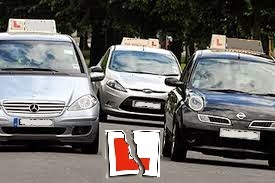
   Unfortunately a few locals seem to resent this enough to start complaining to test centres and local authorities. Nothing better to do it seems. As instructors we must do everything we can to make the situation as peaceful as possible. If I see two driving school cars on a stretch of road then I'll go elsewhere. I find it embarrassing when we're all bunched up together. Some don't though and will happily become the third, fourth or even fifth car on the road to be parking or whatever. Not very diplomatic and sure to wind people up.
  Manoeuvres can be tricky and finding a suitable place to practice is all important. I won't do a left hand reverse on a road that means we will be hindering traffic. On test a candidate may be asked to manoeuvre on a reasonably busy street but on lessons I don't think we should. I see main roads on an estate I use being blocked by pupils practising the turn in the road when just round the corner is a road with hardly any traffic on it. That makes me wonder what's happening, so the people who live on the street are bound to be annoyed. Makes it look like we don't care what they think. When doing a reverse parallel park I always tell my pupil not to pull out and start if there is a car within view coming down the road. If someone comes round the corner and you've already started, that's one thing. If you blatantly pull out and force them to stop when you could see they were coming then that's something else. Ignorant if you ask me but I've seen it done.
   On  the odd very rare occasion I've had people come along and ask us to move. I just act all polite and professional and then move as asked. I don't like it and I am well within my rights to refuse but in the interests of diplomacy and people putting bad things on the internet I comply with their wishes. I've read reports of instructors giving the locals verbal and throwing litter out of the car windows but that must be a real small minority who give such a bad impression of us all.
  There you are. There's only so much space on the road and it's getting more crowded all the time. Let's keep things nice and cosy eh?

Value driving lessons Nottingham

Top driving instructors Nottingham


Wednesday, 8 October 2014

Where's Your Learner Driver Head At?

Top Driving Lessons Nottingham

Now let's not get into an argument.

There are many factors in driving that an instructor can teach. Control skills, procedures, road traffic law, hazard awareness and the like. When we fall into the realm of attitudes and preconceived ideas things can get really messy really quickly. It can be an effort to keep a professional lid on it when personal issues and opinions come in to play which go against what an instructor knows to be right. How far should we go to confront negative attitudes in learners?
   Some pupils find it hard to pass the driving test. Most people pass first or second attempt but a few will take repeated attempts before they are successful. Sometimes it's pure nerves getting in the way. What happens when it is how someone thinks that's the problem? For the first time in thirteen years of teaching I'm thinking of referring a pupil elsewhere to see if a different approach is the key.
   When a pupil blames 'that stupid roundabout' for things going wrong there's not a lot of places you can go with it. Appealing to reason was my first choice. Explaining that a roundabout can't be stupid because it's just a roundabout, the same one everybody else is driving around without trouble. My words are greeted with laughter and no thought given to how the driving might not be up to standard. Not much chance of thinking how to put it right then.
   Turning up late every time when they know I'm in an area covered in double yellow lines shows a certain lack of basic respect. When a pupil just doesn't see this and is repeatedly late it get's difficult. Asking to be dropped off at different places is fine with me. Just let me know earlier than 2 minutes before the lesson finishes. Again a basic disregard for others that doesn't show up on the pupil's radar. It's like simple courtesy is an alien concept to them.
   When a pupil regales you with tales of friends who are obviously really bad drivers while laughing like it's the best thing they've ever seen you know it's going to be an uphill struggle. Explaining the moral obligations of being insured to drive can soon get tedious when your learner just doesn't care. Other's do it so why shouldn't they? My pupil started to break the speed limit. When I pointed this out I was told by my pupil that 'my friends drive much faster than this'. Six points in two years here methinks.
   This pupil is actually a really nice person. As we discuss these issues I can feel what should be tuition descending into argument. I don't ever want to get shouty with a pupil so I keep my breathing nice and slow while I put my side across. There is much more emphasis on attitude coaching in driving instruction these days. I don't think we have much chance of changing those attitudes that are deeply ingrained and constantly supported by others outside of driving lessons.
   In an age of complaints and people taking offence over any tiny thing we need to tread carefully when arguing the point. Pupils are paying customers and expect to be treated well during lessons and quite right too. There does come a time though when pressure has to be applied in the nicest way possible. Before I tear what's left of my hair out. Ha.


Sunday, 21 September 2014

Publish Driving Instructors' Pass Rates? No Thanks!

Driving test pass rates only tell a fraction of the story.

I was reading an interview with a driving instructor in the DIA Driving magazine the other day. I found the tone of the interview somewhat elitist and disagreed on many points. I do feel strongly about one particular point though, the publication of an individual instructor's pass rates.
   Like many driving instructors I get the odd pupil now and then who just does not respond well to being on test. They can drive to a suitable standard technically but nerves get the better of them on the day. These pupils who take many attempts to pass are the ones who require us to do the job as instructors. They need a lot of support and encouragement and the knowledge that their instructor will stick with them until they succeed.
  It is these very pupils who I enjoy a good working relationship with. They are the ones who give me good online reviews and recommend me to other people who want to learn to drive. I get a great deal of satisfaction from seeing them succeed after so much work and it's good to have my teaching skills tested. We can all teach those who have natural ability and confidence.
   Ironically it is these pupils who need the most support who are bad for my pass rate. If I have to protect myself against a low published pass rate I will have no choice but to ask these pupils to leave and find another instructor. I won't be able to risk more fails going on to my record and so will not be able to do my job properly. I read an excellent letter from an instructor once who taught in an automatic car and specialised in teaching elderly people and those with learning difficulties. His pupils took several attempts to pass and so his pass rate would be very low indeed. Does this make him a bad instructor? I would say not but the public may view him as such after seeing such a low pass rate published online.
   I would say pass rates are only a useful indicator I the extremes. If an instructor has an extremely high pass rate compared to others in the area it may indicate they are particularly good. An extremely low pass rate may show an instructor who is not up to scratch. The middle ground doesn't say much at all. If the public was to choose an instructor because his pass rate was a few percent higher than the next that would not really be an informed choice.
   Test centres have different pass rates. Mostly due to the difficulty of the traffic situation in that particular area I would say. I don't believe it's because instructors are better in quieter towns than they are in major cities. Pass rates are therefore a poor indicator of a driving instructor's ability. The public would be much better off using word of mouth or online recommendations when choosing who will teach them to drive.

Pass your driving test in Nottingham

Quality driving lessons Nottingham
  

Sunday, 14 September 2014

How Many Driving Lessons Will I Need?

Become a safe driver

How long is a piece of string?

People always ask how many driving lessons they will need to get a licence. This question is impossible to answer. They never ask how many lessons it will take to become a good driver or a safe driver which shows where the real priorities lie for most people. Parents who passed years ago after 10 lessons don't really help matters as they expect their kids to do the same without realising how much driving has changes over the years and that the test has changed in accordance with modern driving.
   A couple of case histories about someone who passed quickly and another who took a long time usually does the trick. To pass in fewer lessons a person will need to have some natural driving ability. This becomes apparent on the first lesson. If a new driver can move the gear stick and operate the clutch smoothly then that are in for an easier time than someone who is lacking in manual dexterity. A good memory for procedures is handy as well as a willingness to put in some extra study in between lessons.
   Parental support is a big factor. The learner who can get private practice with friends or relatives will need fewer lessons and receive a big boost to their confidence. I think the confidence gained outweighs any bad habits or negative attitudes that might be picked up so it's always something I encourage. These things can always be put right anyway.
   At the other end of the scale there are people who have very little in-car experience even as a passenger. They look at the dashboard like it's the cockpit of an alien spacecraft and have difficulty handling the controls with any degree of finesse. Some folks haven't even ridden a bicycle so there are hardly any reference points we can use to begin teaching. Now we're looking at a person who will need more lessons.
   There is a certain pressure on driving instructors to get people through the test in the minimum number of lessons in order to keep costs down. I find that if the pupil is made aware of their progress and each lesson is well structured then this pressure disappears. Learners relax and are willing to take a reasonable number of lessons if they see that they need them to become safer drivers. A mock test at the right time can really put things into perspective.
  I always tell people that they will be driving for decades so what does a few more lessons now matter? Money spent learning to drive safely is money well spent in my book and will reap rewards with a safe and long driving career. Fewer insurance claims and prangs means less financial outlay and driving smoothly means your car will last longer and need fewer repairs. It's win win all the way.

Safe drivers in Nottingham

Nottingham driver trainers

Sunday, 7 September 2014

Saying Goodbye to ORDIT

Being-a driving-instructor

Has the Instructor Training Industry all but disappeared?

I've been on the Official Register of Driving Instructor Training for a good few years now. It's either 6 or 8 I'm not quite sure. My current registration expires in a month but I don't think I'll be renewing it. There's the cost to consider. After buying a new set of books and paying for the inspection it'll come to three hundred pounds easily. I don't have a trainee at the moment either to do the inspection with. I'd have to ask one of my previous trainees to stand in and probably pay them for their time.
   Whenever I do take on a trainee driving instructor they are very rarely starting from scratch. some have been with an instructor they know personally who is not ORDIT registered for the bulk of the training. The lack of knowledge and skill shown after paying for 40 hours of training can be quite shocking. The trainees don't seem to mind that their trainer is not on the register and in some cases don't know the register exists at all. Maybe it doesn't carry the weight I think it does. Several prominent schools I know offer training without being on the register and nobody seems to mind at all.
   I think most people from outside the industry tend to go with the most high profile advertising. The national schools will always win on this front. TV adverts showing driving instruction as a relaxing job where you work the hours you want and still earn a packet give the wrong impression. Perhaps my honesty about what you can earn and the difficulty of the qualification process put people off.
   It seems that paying for a complete course up front appeals to potential instructors. The thought of making one payment and getting it out of the way certainly makes sense. This is something I am loathe to do. Fees are generally non refundable after a certain time. Company policy is a good thing to hide behind when refusing to give someone their money back but as a solo operator I would definitely have to return the money. Not something I would want to do if it's already sitting in my bank.
   I thought at first that potential ADIs would make for reliable customers compared to learner drivers but this has not always been the case. I have had plenty of short notice cancellations which included a lot of booked hours. Many trainees don't even tell me when they have passed so I can keep my records up to date. Of course the record books have to be printed at home at my own expense. This can be a real pain after a full day's work. It's something I'm not going to miss. I'll consider all things over the next month until the registration runs out but I don't think I'll miss being an instructor trainer.